Overview
please respond to Donovan with. 150. words
Documentation: The Social Scene to 1945 – Police Violence Today through the Lens of Gordon Parks
Social Issue: Police violence in the United States, particularly toward Black Americans, continues to be a deeply rooted issue. The movement for racial justice has surged in recent years in response to killings like those of George Floyd, Breonna Taylor, and countless others. The image I chose captures this ongoing struggle in a way that reflects the work of photographer Gordon Parks, who used his camera as a weapon against injustice.
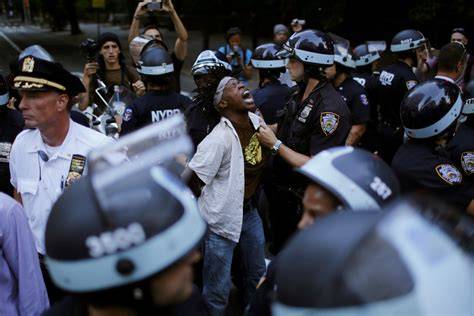
Image: 📸 Protester in front of a police line, Minneapolis, 2020 — Photo by Joshua Rashaad McFadden (New York Times)
Why this image? This photograph shows a young Black protester standing calmly and defiantly in front of a line of riot police during a 2020 protest in Minneapolis following the murder of George Floyd. The subject’s body language—calm yet firm—contrasts sharply with the looming presence of armored officers, creating a visual tension that powerfully communicates the imbalance of power and the demand for justice.
Why Gordon Parks would have documented this: Gordon Parks, whose work we explored in our reading and the supplemental podcast, was known for documenting racism, segregation, and inequality throughout the mid-20th century. One of his most famous photo essays, "A Harlem Family", depicted Black life with compassion, nuance, and deep social commentary. Parks didn’t just record events—he told stories that humanized his subjects and exposed the structures of oppression around them.
Parks himself once said that he chose the camera as his weapon against racism. This contemporary image reflects that same mission. Like Parks, McFadden centers the dignity of the Black subject. The photo isn’t about the chaos of protest; it’s about a human moment—a powerful demand for recognition and change. The composition is also similar to Parks’ work: balanced, emotive, and focused on narrative, not spectacle.
Conclusion: This image of a modern protest mirrors the emotional weight and social urgency of Gordon Parks’ photography. Both use visual storytelling to challenge systemic injustice and to inspire empathy and action. By looking at today’s social issues through the lens of a past photographer like Parks, we better understand the enduring power of documentary photography—and how the past continues to shape our present.