Goal
Use the modules and review resources to complete the chart on this handout comparing pelvis and other bipedal features of the chimp, human, Australopithecus afarensis, Homo erectus, and Homo neanderthalensis skeletons. Refer to the module page for images needed for this assignment.
Instructions
Refer to the module page Pelvis Images for the Assignment (Genus Homo) for images and 3-D rotations of the four pelvises you need to describe and compare. You can also look at Comparing and Measuring the Pelvis (Genus Homo)
Open the worksheet An111 Comparing Genus Homo pelvis shape-1.docx Download An111 Comparing Genus Homo pelvis shape-1.docx and fill out the table to compare features across the species. The rows will ask for one of the following types of answers.
Simple descriptions and comparisons are fine for our purposes, Review:
Present or absent: When a feature is either there or not, you can use a + for present and – for absent.
For example, “presence of sagittal crest” can be answered + or –.
Describe: When you are asked to describe a feature, do so with a few words or short phrase.
For example, “shape of dental arcade” can be answered “U-shaped.”
Compare: When you are asked to compare, you need to ask “compare to what?”
For Example: If there are three skulls being compared, you might say X and Y are smaller than Z. Or X is smaller than Y and Y is larger than Z.
Measure: Use the measurements you collected
Measurements gathered from teaching materials at LAVC. All measurements are in millimeters
Homo erectus (WT 15000)H. neanderthalensisHuman (euro male)A. afarensisiliac width
130
152
12596iliac height
- 107
128
10782
Week 14 - Pelvis Images for the Assignment (Genus Homo)
Pelvis Images for the Assignment
Please use these images to complete the Comparing Early Hominin Pelvis Shape Assignment.
- Human Pelvis - look at eSkeletons OsCoxaeLinks to an external site.
Pelvis Links to an external site. by Bluelink Anatomy - University of Michigan Links to an external site. on SketchfabLinks to an external site.
Chimpanzee pelvis - look at eSkeletons - Chimp Os CoxaeLinks to an external site.
Chimpanzee Pelvis Links to an external site. by dartmouthx Links to an external site. on SketchfabLinks to an external site.
For review: Australopithecus afarensis - look at eFossils - Lucy PelvisLinks to an external site.
Lucy Pelvis with Texture Links to an external site. by Wellesley College Links to an external site. on SketchfabLinks to an external site.
[Image unavailable: Auafarensis_pelvis_superior_f.jpg]
Homo erectus
KNM WT 15000 eFossils Os CoxaeLinks to an external site.
- Homo ergaster (2501.1rp83) - pelvis Links to an external site. by RLA Archaeology Links to an external site. on SketchfabLinks to an external site.
Homo neanderthalensis
Homo neanderthalensis Pelvis (Sawyer & Maley) Links to an external site. by UCFanthropology Links to an external site. on SketchfabLinks to an external site.
Ilium Blades for Measuring the Iliac index
Chimpanzee
[Image unavailable: Ptrog_oscoxae_Index ruler_sm.png]
Human
[Image unavailable: Hs os coxae index ruler_sm.png]
Homo erectus
Image Credit: screenshot by R. Frank of SketchFab Homo erectus pelvisLinks to an external site. model by Steve Davis of RLA of the University of North Carolina, at Chapel Hill.
- [Image unavailable: Homo erectus pelvis, lateral view with arrows and rulers for calculating ilium index]
Homo neanderthalensis
Image Credit: screenshot by R. Frank of SketchFab H. neanderthalensis pelvisLinks to an external site. model by SeminarsonscienceLinks to an external site. by the American Museum of Natural History
[Image unavailable: Homo neanderthalensis pelvis, lateral view with arrows and rulers for calculating ilium index]
Skeleton Images for the Assignment
Use this page from eLucy of her full skeleton,Links to an external site. and its comparisons to chimps and humans to describe and compare some of the features related to bipedal walking.
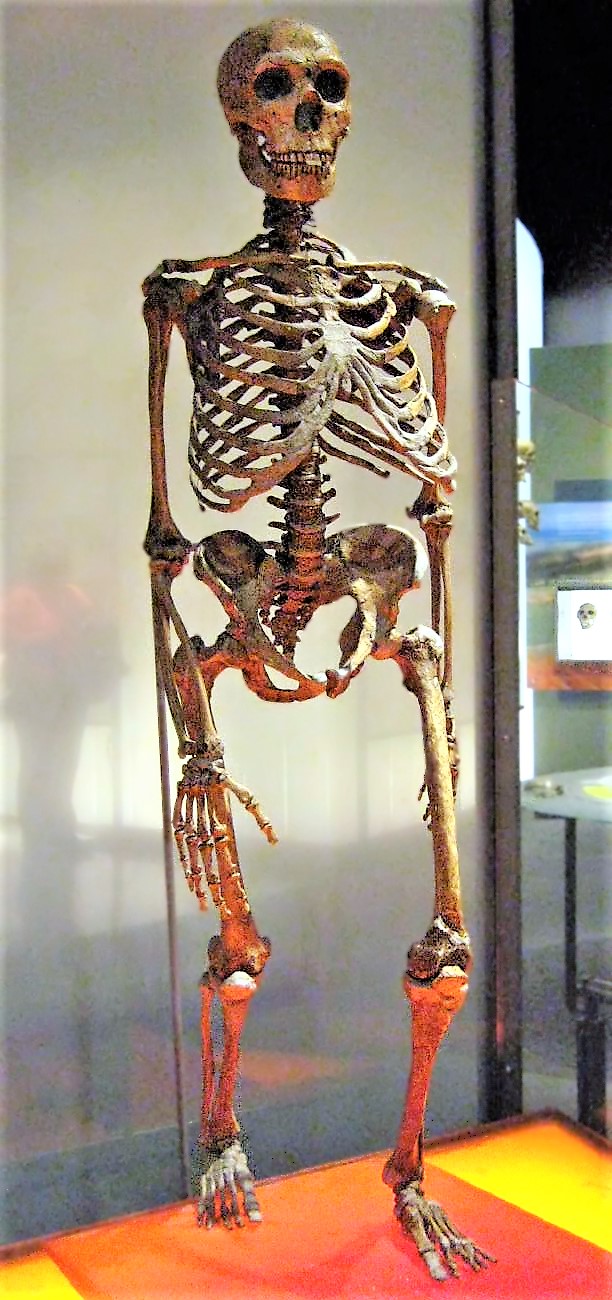
Neanderthal Skeleton. American Museum of Natural History. Photo Credit: Claire Houck from New York City, USA, CC BY-SA 2.0 , via Wikimedia Commons
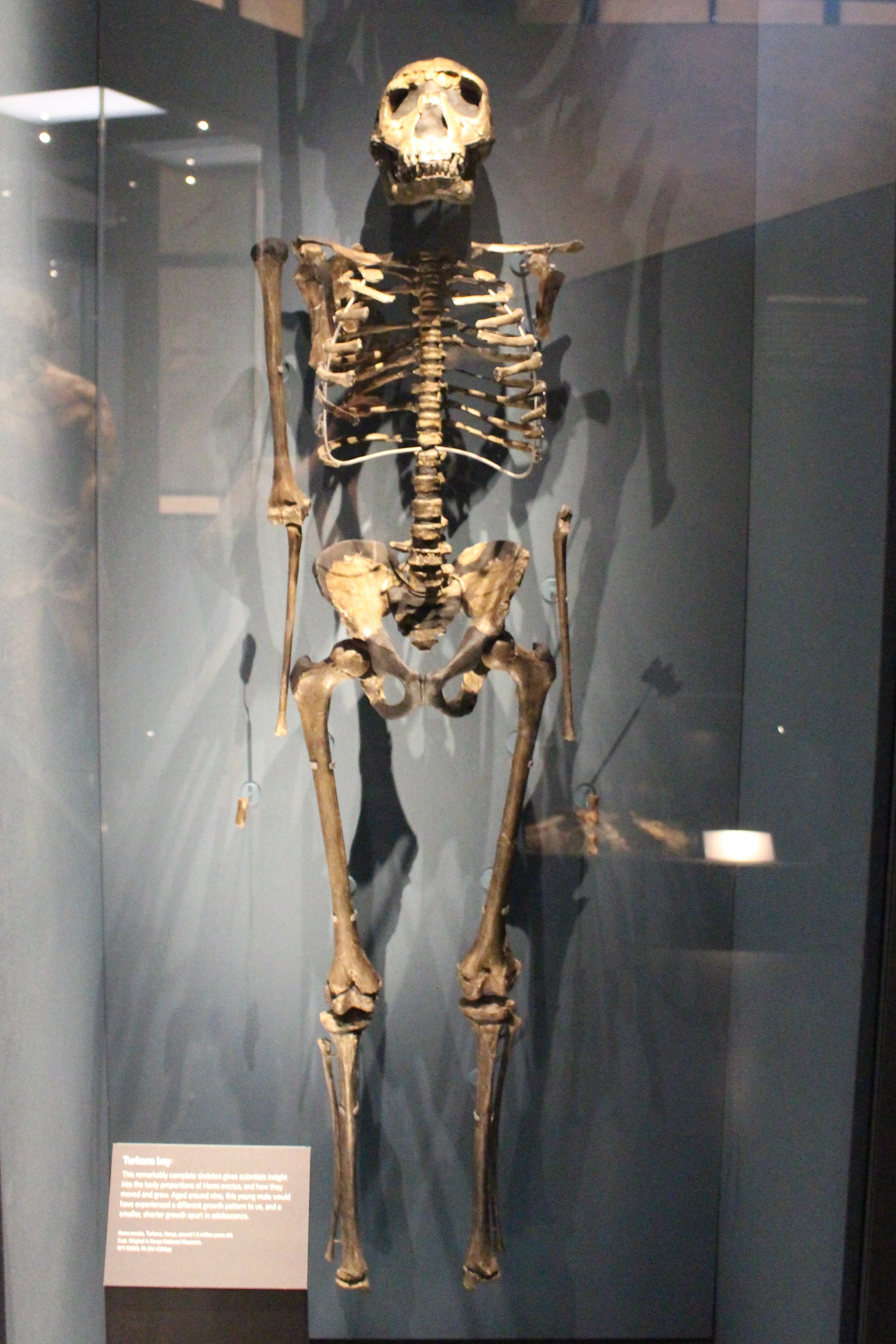
Homo erectus. KNM WT 15000. Photo Credit: Em?ke Dénes, CC BY-SA 4.0 , via Wikimedia Commons