DISCUSSION 3.3 :
Representing Native Americans as "The Vanishing Race"
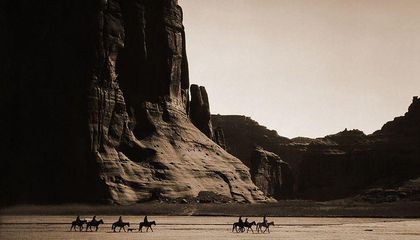
Answer the following in full sentences and a cohesive short essay format (at least 1 paragraph for each numbered section):
1. Choose 1 of the following Curtis photographs and provide an in-depth formal analysis...
- Curtis, The Vanishing Race (ca. 1904, dry-plate collodion produced as a paper print)
- Curtis, Arikara. Barriga de Oso -- Bear's Belly (ca. 1908, dry-plate collodion produced as a photogravure)
- EDITED VERSION: Curtis, Little Plume and son Yellow Kidney seated on ground inside lodge, pipe between them (ca. 1911, dry-plate collodion produced as a photogravure)
UNEDITED VERSION: Curtis, Little Plume and son Yellow Kidney seated on ground inside lodge, pipe between them (ca. 1911, dry-plate collodion produced as a photogravure)

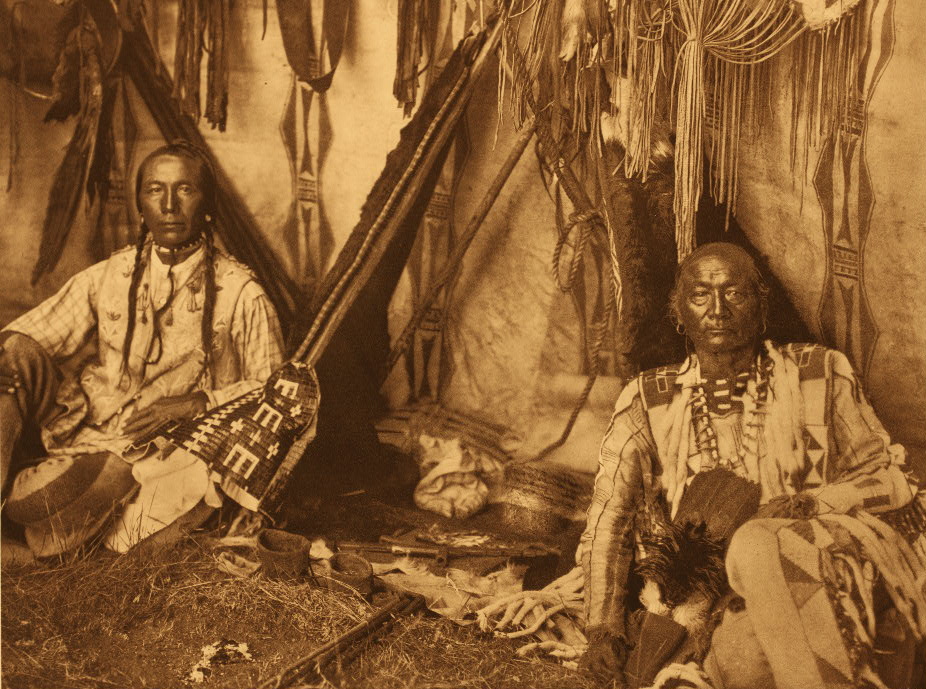

2. Explain how Curtis' choices contribute towards shaping ideas about Native Americans that fit into existent cultural scripts and biases held by white American colonizers during the period of Western Expansion in the United State.
- Think about how specific form, style, symbolic references, and retouching (editing) work to produce meaning and shape the way the viewer sees Curtis' Native American sitters.
- Think about why Curtis represents the Native Americans in these ways; what larger purpose or actions do his images ultimately help to support?
- Think critically about how Curtis' acts of staging and photo-editing literally shape/alter perceptions and skew "truthful" representations/understandings of Native American culture.
3. Discuss how Curtis' photographic work has been re-evaluated and critiqued by contemporary scholars, curators, and artists. What kinds of interventions have been taken towards his photographs and the kinds of narratives that they created/perpetuated?