- Program overview
- Portfolio project
Overview
In this lesson, you'll complete and submit your final portfolio project. You'll revisit each of the topics covered in this program and ultimately create a variety of strategic and cohesive deliverables for one company.
Congratulations—you're near the end of the Digital Marketing program! For your final digital marketing project, you're going to create a portfolio piece that combines all of the knowledge and skills that you've gained throughout this program.
Choosing a company for your portfolio project
For this project, you can choose between the following two options:
- Base your project on a local nonprofit, such as a local humane society, food bank, shelter, or youth after-school program.
- Base your project on a fictional nonprofit, Save the Waves, which you can read more about in Option 2 below.
Option 1: Using a local nonprofit
Try to base your project on a local nonprofit; this can boost your resume because employers tend to prefer candidates with client work.
However, if you choose to base your project on a nonprofit, you first need to get the nonprofit's permission; otherwise, you risk trademark infringement. (Here's a template that you can use to reach out to nonprofits in your area.)
The good news is that most nonprofits are happy to work with you. They usually don't have big budgets for lavish marketing, and they generally appreciate the free help, expertise, and potential publicity.
Because this project will be shared with potential employers, it's best to avoid choosing a controversial or political nonprofit.
Option 2: Using a fictional nonprofit
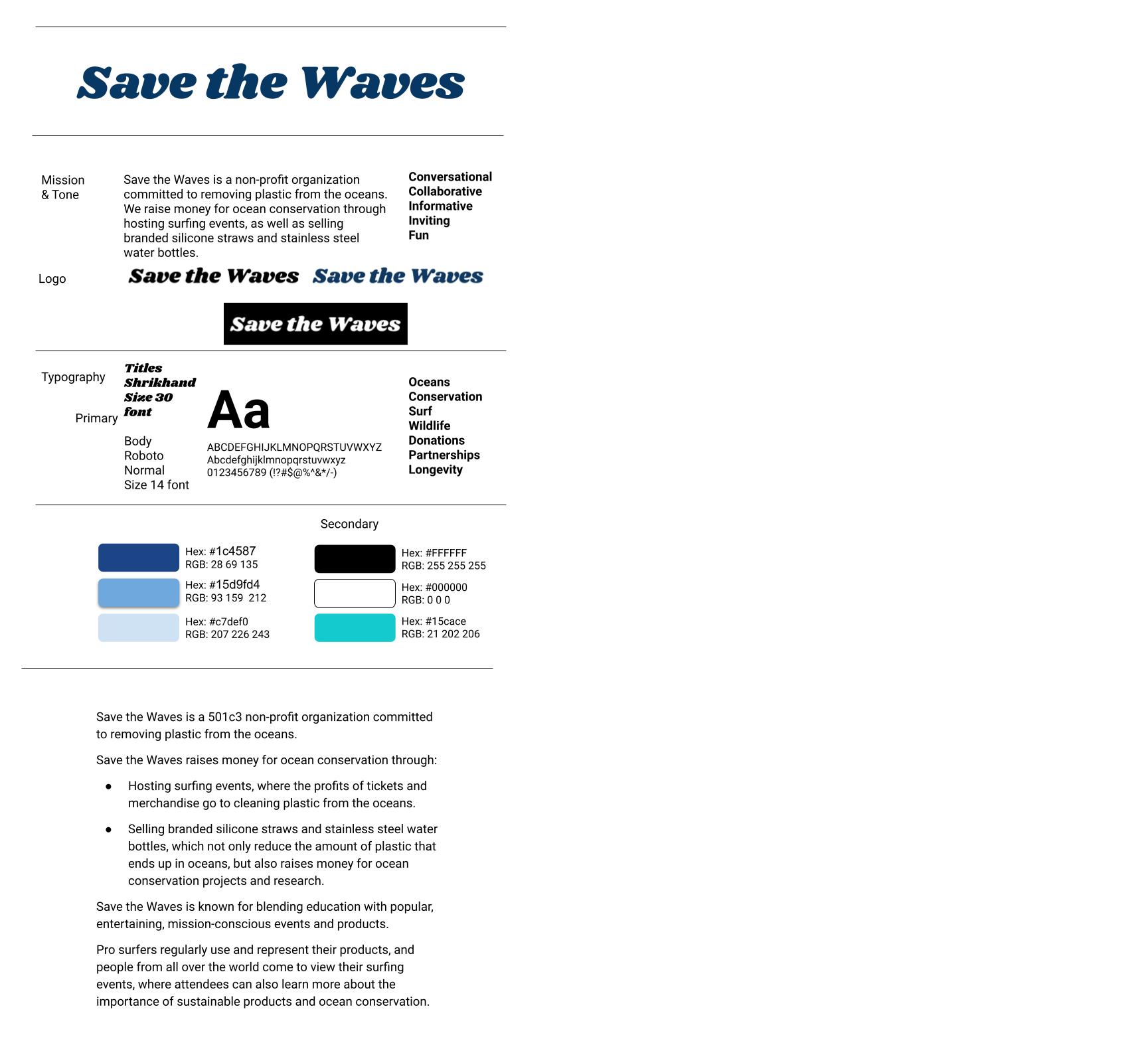
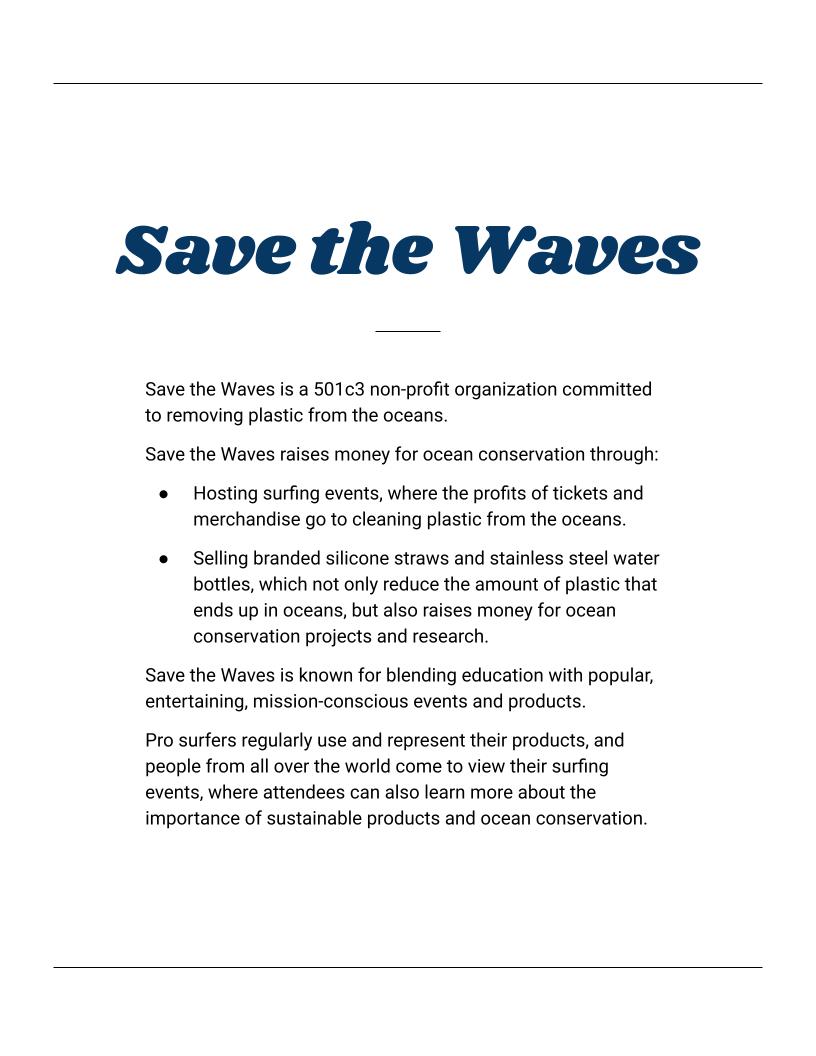
If you can't find a nonprofit that's willing to let you base your project on them, you can use a fictional nonprofit called Save the Waves. Below are links to some information about Save the Waves:

Creating your portfolio project
Creating your portfolio project requires multiple steps. First, you need to create each deliverable. Then, you need to compile the deliverables into an orderly and polished portfolio.
Creating each deliverable
Based on the company that you choose, create the following deliverables:
- One buyer persona based on one of the people groups that the company targets, such as donors or clients
- Two blog posts, each based on a relevant long-tail keyword and including metadata
- Two emails
- Three Facebook posts
- Three Instagram posts
- Three Tweets
- Two posts on one additional social media platform of your choosing, such as Pinterest, Snapchat, TikTok, or YouTube
When creating social media posts, you can either use your personal accounts, create test accounts, or create mock posts using Ad Mockup Generator or Smartmockups. Review the grading rubric below for more detail on what's required for each deliverable.
Compiling your deliverables into a portfolio
After you create each of the above deliverables, compile them into a portfolio using Google Slides. Google Slides is handy because it allows for individual creativity while enabling you to easily share your portfolio with employers by either linking to it or saving it as a PDF.
You can create your own Google Slides portfolio from scratch. Or, if you prefer, you can use this template to get started. If you use the template, be sure to customize it to your nonprofit's preferences and needs.
Submitting your portfolio project
Submit your portfolio by sharing a link to your Google Slides. Make sure that your sharing permissions allow others to comment on your document.
Exemplary submission
Revisit previous assessments from this program to confirm that your submission matches the standards set forth as exemplary. You can see the examples of exemplary submissions at the following links:
One final note...
Remember, this is a graded lesson. That means that someone from the Chegg Skills team will review your work using the rubric provided below. Here are the specifics:
- Grading rubric: The graders will use the criteria in the following rubric when grading your work. All questions use a yes–no framework unless otherwise indicated, and all of the yes–no questions must answer "yes" for you to pass.
- Additional feedback: Graders will also use the rubric to provide you with feedback. This feedback does not affect whether you pass or fail; it is there to help you revise your work or improve upon it.
Keep this information on hand as you prepare, and good luck!
Grading rubric
- Question 1Is the project based on either a local nonprofit or on the Save the Waves imaginary company?
- Yes
- No
- Question 2Was the project submitted as a Google Slides file?
- Yes
- No
- Question 3Does the project include a title page?
- Yes
- No
- Question 4Does the title page include the student's name?
- Yes
- No
- Question 5Does the project include an About page?
- Yes
- No
- Question 6Is the About page 100-300 words?
- Yes
- No
- Question 7Does the About page introduce the student and their marketing experience?
- Yes
- No
- Question 8Does the project include a contact page at the end?
- Yes
- No
- Question 9Does the contact page include the student's email address and phone number?
- Yes
- No
- Question 10Does the portfolio project—overall and each individual deliverable—adhere to the nonprofit's style guide (fonts, colors, consistency in formatting, etc.)?
- Yes
- No
- Question 11Did the student create the buyer persona in Google Slides?
- Yes
- No
- Question 12Does the buyer persona include all of the following information: persona name, image, location, age, income, career, marital status, identifiers, influences, goals, challenges, objections, and opportunities?
- Yes
- No
- Question 13Does the buyer persona use perfect spelling and grammar?
- Yes
- No
- Question 14Does the buyer persona appear on-brand for the company (colors, fonts, etc.)?
- Yes
- No
- Question 15Did the student write both blog posts in Google Docs?
- Yes
- No
- Question 16Are both blog posts displayed in Google Slides, including a URL to their Google Doc?
- Yes
- No
- Question 17Are both blog posts between 500 to 1000 words in length?
- Yes
- No
- Question 18Are both blog posts written about one long-tail keyword?
- Yes
- No
- Question 19Are the keywords different for each blog post?
- Yes
- No
- Question 20Are the keywords specified above each blog post?
- Yes
- No
- Question 21Do both blog posts include a relevant title?
- Yes
- No
- Question 22Do both blog posts' titles contain the chosen keyword?
- Yes
- No
- Question 23Do both blog posts include a relevant subtitle?
- Yes
- No
- Question 24Do both blog posts contain the chosen keyword in the subtitle?
- Yes
- No
- Question 25Do both blog posts contain the chosen keyword (or relevant variations of it) at least three times?
- Yes
- No
- Question 26Do both blog posts include at least one relevant image?
- Yes
- No
- Question 27Do both blog posts include a call to action?
- Yes
- No
- Question 28Are both blog posts ordered logically?
- Yes
- No
- Question 29Do both blog posts appear on-brand for the company (colors, fonts, etc.)?
- Yes
- No
- Question 30Do both blog posts use perfect spelling and grammar?
- Yes
- No
- Question 31Are both posts' metadata displayed in Google Slides?
- Yes
- No
- Question 32Do both posts' metadata relate to the keyword written about in one blog post?
- Yes
- No
- Question 33Do both meta titles contain the related keyword?
- Yes
- No
- Question 34Do both meta descriptions contain the related keyword?
- Yes
- No
- Question 35Does it include an alt image description?
- Yes
- No
- Question 36Do both URL slugs contain the related keyword?
- Yes
- No
- Question 37Are both emails displayed in Google Slides?
- Yes
- No
- Question 38Did the student create both emails in Mailchimp?
- Yes
- No
- Question 39Do both emails include preview text?
- Yes
- No
- Question 40Do both emails include an audience?
- Yes
- No
- Question 41Do both emails include relevant copy?
- Yes
- No
- Question 42Do both emails include relevant imagery?
- Yes
- No
- Question 43Do both emails have imagery that is hyperlinked (to any web page)?
- Yes
- No
- Question 44Do both emails include one call to action?
- Yes
- No
- Question 45Are both calls to action hyperlinked (to any web page)?
- Yes
- No
- Question 46Do both emails include a footer with an unsubscribe button?
- Yes
- No
- Question 47Do both emails appear on-brand for the company (colors, fonts, etc.)?
- Yes
- No
- Question 48Do both emails use perfect spelling and grammar?
- Yes
- No
- Question 49Does the project contain three Facebook posts?
- Yes
- No
- Question 50Is at least one of the Facebook posts a copy post?
- Yes
- No
- Question 51Is at least one of the Facebook posts a photo post?
- Yes
- No
- Question 52Is at least one of the Facebook posts a link post?
- Yes
- No
- Question 53Does each Facebook post use perfect spelling and grammar?
- Yes
- No
- Question 54Do all Facebook posts appear on-brand for the company (colors, fonts, etc.)?
- Yes
- No
- Question 55Does the project include three Instagram posts?
- Yes
- No
- Question 56Is at least one of the Instagram posts a video post?
- Yes
- No
- Question 57Is at least one of the Instagram posts a text image?
- Yes
- No
- Question 58Is at least one of the Instagram posts a photo post?
- Yes
- No
- Question 59Does each Instagram and Facebook post include a caption that either educates, inspires, or entertains?
- Yes
- No
- Question 60Does each Instagram and Facebook post include a call to action?
- Yes
- No
- Question 61Does each Instagram and Facebook post include relevant hashtags?
- Yes
- No
- Question 62Does each Instagram post use perfect spelling and grammar?
- Yes
- No
- Question 63Do all Instagram posts appear on-brand for the company (colors, fonts, etc.)?
- Yes
- No
- Question 64Does the project include three Twitter tweets?
- Yes
- No
- Question 65Does at least one of the tweets contain a photo?
- Yes
- No
- Question 66Does at least one of the tweets contain a link?
- Yes
- No
- Question 67Does each tweet include content that either educates, inspires, or entertains?
- Yes
- No
- Question 68Does each tweet contain at least three relevant hashtags?
- Yes
- No
- Question 69Does each tweet use perfect spelling and grammar?
- Yes
- No
- Question 70Does the project include two social media posts on an additional platform?
- Yes
- No
- Question 71Do the posts on the additional two social media platforms appear on-brand for the company (colors, fonts, etc.)?
- Yes
- No