The Final Essay in this course will give you the opportunity to explore and compare ideas, concepts, and philosophies from the different philosophical traditions that you have been introduced to in the course.
I. Purpose of the Final Essay Assignment:
- To give you experience synthesizing and integrating what you have learned in the course into a coherent written essay.
- To give you experience analyzing and comparing philosophical ideas from different philosophical traditions
 Being able to write a good essay is both a source of creative energy and it may algo be a challenge. I want you to feel comfortable writing your essay and to feel that your effort deserves the best grade possible. At the same time, if you feel you might need a bit of help with style, citing, referencing and general writing issues, I'd like to invite you, even encourage you, to use any of the resources available at https://libguides.umgc.edu/gethelp/writing-citing.
II. Technical Requirements of the Final Essay Assignment
- 1,250 -1,500 words (5-6 double spaced pages)
- Word Cited (1-2 double spaced pages)
- Microsoft .docx (not .pdf or .pages)
- 12 pt. Times New Roman Font, Double Spaced, 1” left and right margins
- Works Cited must be in MLA format:
- http://sites.umgc.edu/library/libhow/mla_tutorial.cfm
- Cite only the required readings, philosophical texts, linked articles and videos in the course. Do not cite external websites or videos that you “googled” and that do not appear in the course!
- Your paper should be your original work, citations and quotes should not exceed more than 30-35% of your paper. Critical thinking and originality are demonstrated by how well you use external sources to support your line of thinking, but the sources are NOT the paper, your critical analysis is.
- At the beginning of your essay provide the following AUTHENTICITY
 STATEMENT (required):"I am grateful for the opportunity to demonstrate my creativity and ability to produce a document that reflects my intellectual abilities and skills. I hereby certify that what follows is my own intellectual work and that I have done my best to comply with UMGC's academic integrity guidelines, providing in-line citations and references as needed."(Remember, if you have doubts about citing and referencing, go to https://libguides.umgc.edu/gethelp/writing-citing.)
III. Subject of the Final Essay Assignment
Compare and contrast two (or more) philosophical texts and authors from different traditions in the same philosophical subject.
Example A: Compare ideas in Dharmaraja Adhvarindra, Vedanta-Paribhasa (W2.P2.3) with John Locke, Essay Concerning Human Understanding (W2.P2.6) on a topic in Epistemology.(Week 2)
Example B: Compare ideas in Han Fei Tzu, Sayings of Han Fei Tzu (W6.P2.5) with Niccolo Machiavelli, The Prince (W6.P2.6) on a topic in Political Philosophy (Week 6)
IV. Structure of the Final Essay Assignment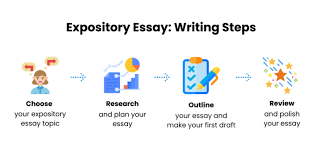
Structure your final essay as an expository essay. The expository essay is a genre of essay that requires you to investigate an idea, evaluate evidence, expound on the idea, and set forth an argument concerning that idea in a clear and concise manner. A typical expository essay will have six sections of at least one paragraph each and YOU MUST FOLLOW THE DESIGN as indicated below (6 paragraphs only):
- An introductory paragraph (paragraph 1)
- Three evidentiary body paragraphs (paragraphs 2, 3 & 4)
- A counterargument paragraph (paragraph 5)
- A conclusion paragraph (paragraph 6)
After the conclusion you provide your bibliography using MLA format.
The expository essay has the following components:
1. A clear, concise, and defined thesis statement that occurs in the first paragraph of the essay.
Since your essay will have a comparison/contrast focus, your thesis statement should state the central aim of your essay as some kind of comparison or contrast. A main source or sources should be provided to substantiate your thesis, with proper in-text citations (and the references at the end).
Example A: Gautama Buddha’s First Sermon reflects the eastern focus on human suffering while Aristotle’s Nicomachean Ethics reflects the western focus on human value.
Example B: Aristotle’s Virtue Theory is superior to Confucian Virtue Theory.
2. Clear and logical transitions between the introduction, body, and conclusion.
The reader needs to be able to follow the comparison argument you state in your thesis from start to finish.
3. Body paragraphs that include evidential support.
Each paragraph of your essay should be limited to the exposition of one general idea. This will allow for clarity and direction throughout the essay. What is more, such conciseness creates an ease of readability for one’s audience. It is important to note that each paragraph in the body of the essay must have some logical connection to the thesis statement in the opening paragraph.
Evidential support:
Use direct quotes of no more than a sentence in length from the philosophical texts you are expounding as evidential support for your thesis. Explain how these quotes are evidence for your thesis in the body paragraphs. Evidential paragraphs (paragraphs 2, 3 & 4) that do not provide quotes or paraphrases from the philosophical frameworks or sources provided in the course will not be strong enough to get a good grade. Sources used must me properly cited in-text and the full reference provided at the end.
4. Address counterarguments to your thesis.
Devote at least one paragraph to a fair and honest counterargument to your thesis. [Beware of the Strawman Fallacy]. The length of your fifth paragraph will depend on how much counter evidence you provide. It shouldn't be a big quotation, but use sources to support the counterarguments.
5. A conclusion that does not simply restate the thesis, but readdresses it in light of the evidence provided.
PLEASE USE THE OUTLINE OF THE ABOVE REQUIREMENTS AS YOUR CHECKLIST PRIOR TO SUBMISSION OF YOUR PAPER. And, yes, please do a spell check prior to submission because you want your paper to look pretty!!!
V. Grading of the Final Essay Assignment
It is great to be able to know before hand how you will be graded! If you read the instructions well and prepare accordingly your grading will be the highest possible.
Your Final Essay Assignment will be graded as follows
Knowledge of Philosophical Subject/Texts/Authors: You are expected to demonstrate knowledge of the philosophical subject you are writing about, i.e., metaphysics, epistemology, political philosophy, ethics, and knowledge of the philosophical texts/authors you are comparing that are the subject of your essay. Your knowledge is evidenced by the sources used and how you use them (including proper citation and referencing).
Thesis Statement: You are expected to craft a clear and concise thesis statement that appears in the introductory paragraph of your essay.
Essay Structure: You are expected to organize your essay into introduction, body (evidential paragraphs 2, 3 & 4), counterargument (paragraph 5) and conclusion (paragraph 6) sections/paragraphs. It is okay to use headers for each of the sections. You are expected to provide clear and logical transitions between the sections of your essay that will allow the reader to easily follow the logic of your thesis.
Body and Evidence: You are expected to provide direct quotes from the philosophical texts as evidence for your thesis, and to explain these quotes in the body of your essay (paragraphs 2, 3 & 4)
Counterargument and Conclusion: You are expected to devote at least one paragraph (paragraph 5) to a fair and honest counterargument to your thesis, and to conclude your essay (paragraph 6) by readdressing your thesis in light of the evidence provided.
You can do this and you will do it well!! I look forward to reading your paper!!